Get a Free Product: How Sample Offers Work
Learn how to get a free product through sampling programs, what brands expect in return, and how to spot legitimate offers before you sign up.
In this guide
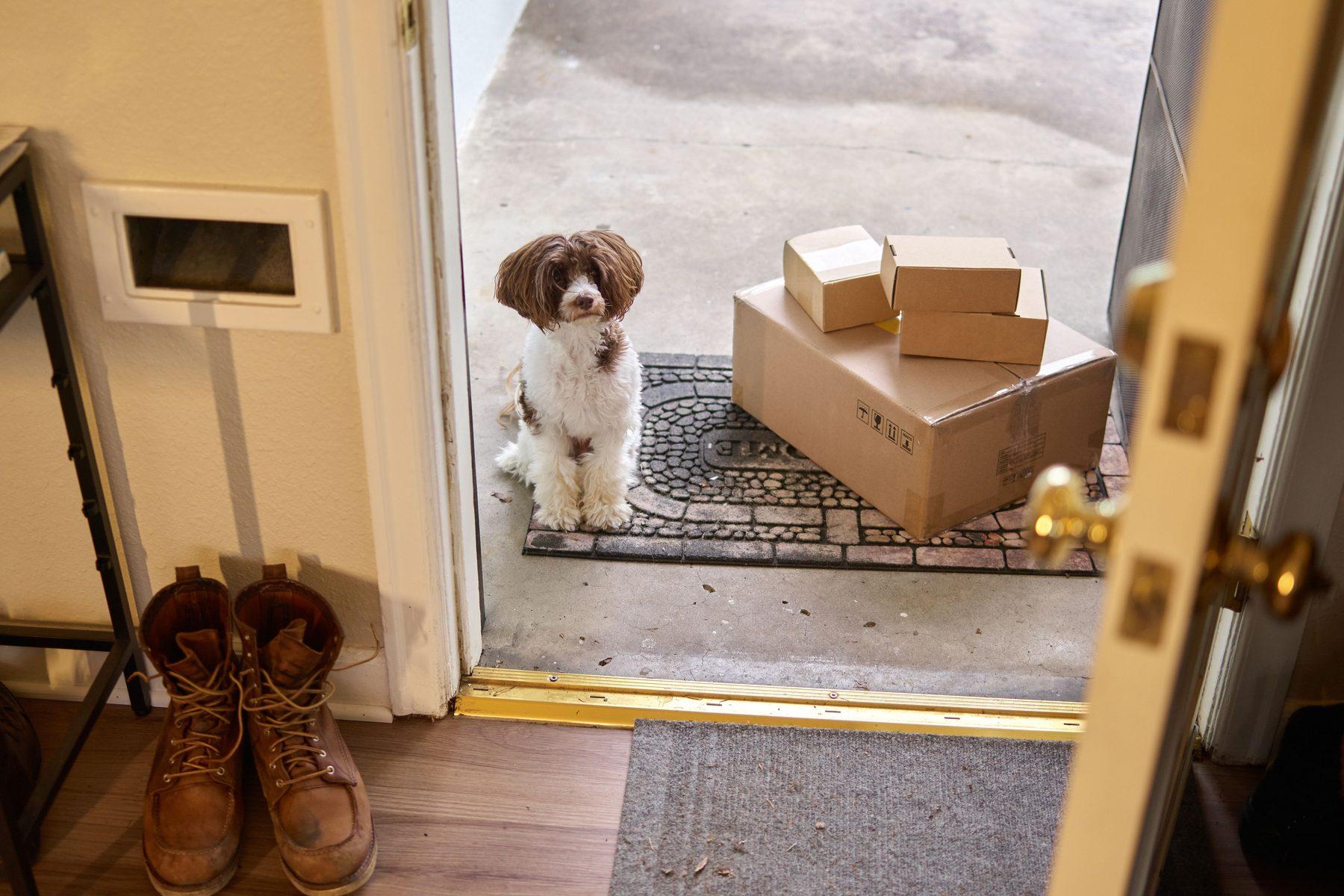
A product arrives at your door with no price on it. Who paid for it?
Most free-offer pages answer a different question. They explain what you get, then stop, leaving out the part where you give something back. That gap is where confusion grows, and where a sensible shopper starts to feel either gullible or suspicious. Neither reaction helps you decide.
A free sample isn't a gift with no strings attached, and it isn't a trick. It's a trade. The brand pays in product instead of cash, and you pay in something other than money: attention, feedback, an email address, a few minutes of writing, or a purchase later on. Once both sides of that exchange are visible, free offers stop being mysterious. They become easy to judge in about thirty seconds.
Why a Free Product Offer Is Really a Trade
The tasting counter at a grocery store is the whole sampling economy in miniature. An employee in an apron holds out a paper cup with a cube of cheese on a toothpick. You take it. Nobody asks for money, and nobody hands you a bill afterward.
The store gave up a piece of cheese and a minute of an employee's time. What it gets back is your attention at the exact moment you're deciding what goes in your cart, plus a small sense of obligation that might turn into a sale. The cheese costs less than the printed sign it replaces.
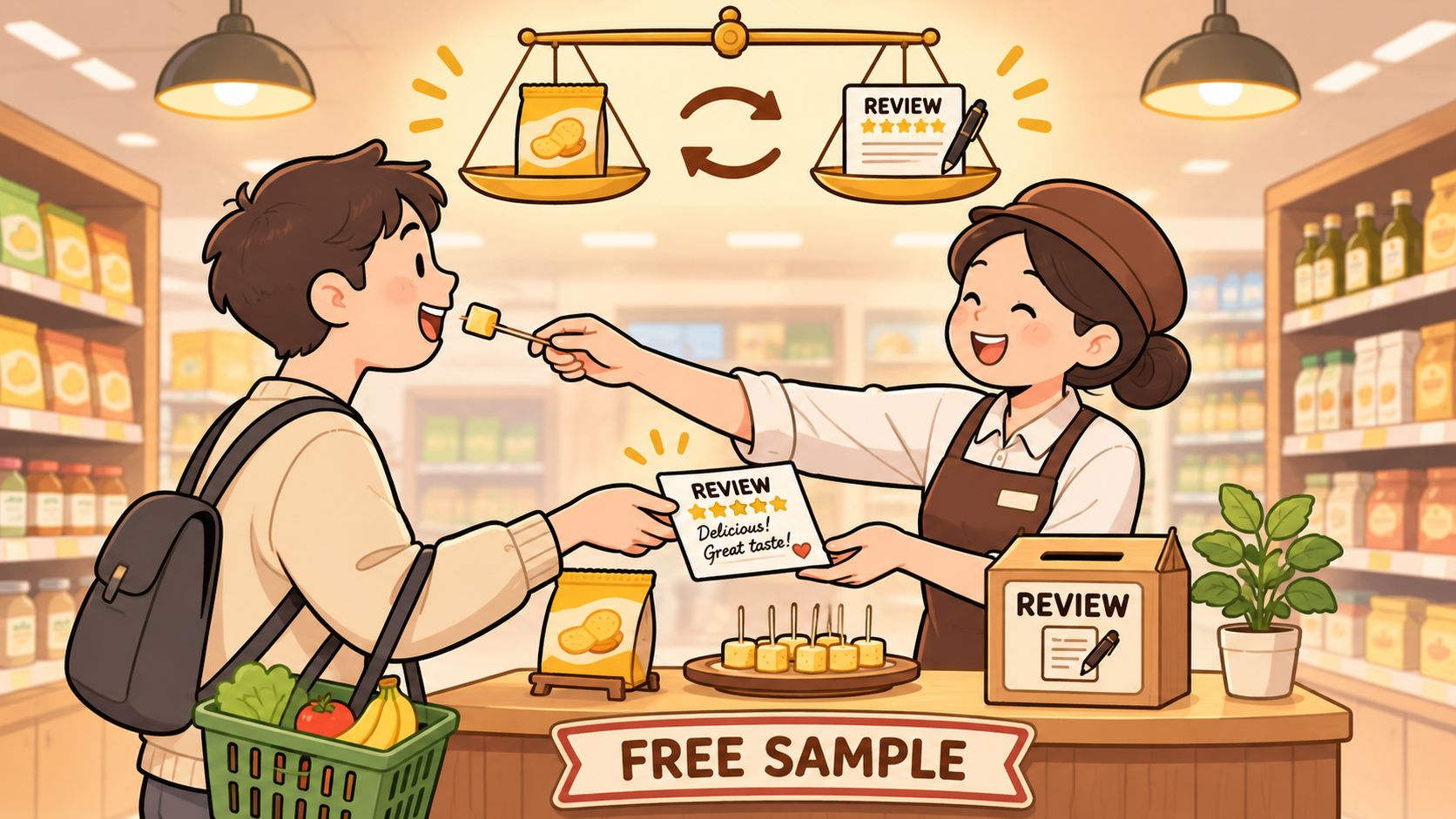
A free product shipped to your home runs on the same engine, with a longer timeline and a bigger item. The brand chooses a product and an audience it wants to reach. It sends the item at its own expense. You use it, then give something back, usually by a date the brand sets.
The asks are fairly predictable:
- An honest reaction. The brand wants to know whether the serum absorbs, whether the treats upset a dog's stomach, whether the pan handle gets hot in a normal week of cooking.
- A published review. Your words go somewhere shoppers can read them, and that's the currency in this exchange.
- A way to reach you. An email address turns one sample into a relationship, and it's often the quiet reason a freebie exists at all.
- A future purchase. Not demanded, but hoped for. The sample is a bet that you'll come back and pay full price.
None of this is hidden, though most offers mention it in small print. The pull is real and measurable. Research on sampling programs summarized in a 2023 review of product-tester studies found that perceived reciprocity, the sense that a free sample creates a relationship, had a positive and statistically significant effect on product ratings, though it did not affect purchase intention. In plain terms, the freebie nudges how people score a product, not whether they buy it.
Ask before you accept: what am I giving, and what do I keep?
The Main Types of Free Offers Compared
Free offers come in a handful of shapes, and sorting them from the most common to the least common makes the trade visible at a glance.
| Offer type | What you receive | What the brand usually wants | Common catch |
|---|---|---|---|
| Free sample | A trial-size product sent to you | Your honest feedback or a short post | A review deadline |
| Full-size product for review | A product you keep after reviewing it | An honest review on the brand's own website | Posting the review on time |
| Free trial with card on file | Full access for a set period | Your card details and continued interest | Charges begin when the trial ends unless you cancel |
| Sign-up bonus | A free item or credit for joining | Your email address and often a first purchase | A minimum order may be required |
| Birthday or loyalty reward | A treat on a special date | An account and continued loyalty | A qualifying date or account history |
| Free gift with purchase | A small extra item added to your order | A purchase above a set amount | You must spend the required amount |
| Giveaway or contest | A chance to win a product | Your entry details, often a follow or share | Only winners receive the product |
| Referral reward | A reward for bringing in a friend | Your friend's sign-up and first step | The friend must complete the required step |
The two rows you'll meet first
A skincare brand sends a travel-size serum and asks for a short review on its own website, with no photos required. A pet food company sends a bag of treats and asks for a photo of the bag in use alongside a few sentences, which is why the photo request appears in the offer itself rather than after the fact. Both are straightforward trades with a clear deliverable.
The free trial with a card on file is the row that costs people money. Access is free for the trial period, and then billing starts automatically unless you cancel before the date the terms list. Set a calendar reminder for two days before that date; the reminder is cheaper than the subscription.
The rows that depend on someone else
Birthday and loyalty rewards need an account and a qualifying date, so the treat is really a nudge to keep shopping with the same store. A referral reward depends on another person's behavior: your friend has to finish the required step, not just click a link, before anything reaches you.
Giveaways sit at the far end because the trade is uneven. Everyone who enters gives attention and contact details, and only the winners receive a product. Entering is fine as long as you count the odds as part of the deal.
Read the catch column first. What lands on your doorstep, what the brand gets from you, and what the catch says. If any of the three is unclear, the offer isn't ready for a yes.
What Brands Gain From Giving Products Away
A new product faces a specific problem. Shoppers who've never heard of it go looking for evidence, and the evidence they trust is other people's experience. A product page with zero reviews reads like a risk, however good the formulation is.
That habit is well documented. Independent ecommerce usability research from Baymard's study of user review sections found that 95% of tested users relied on reviews to evaluate products or learn more about them, and that shoppers sometimes used information in reviews instead of product descriptions or specification sheets. When the loudest signal on a page is what customers say, a page with nothing to say has a problem.
Three things a brand gets back
The first is early feedback that reaches people who can act on it. A tester who notes that the pump clogs, or that the scent fades within an hour, hands the brand a fix list before a hundred paying customers hit the same wall.
The second is a first block of reviews on a product page. New items often sit empty for weeks, and every one of those weeks costs sales. Feedback placed where shoppers are already deciding solves that, which is why sampling programs send people to the brand's own product page rather than somewhere a shopper may never visit.
The third is a clearer picture of who likes the product. Patterns across reviews show whether a moisturizer suits dry skin or oily skin, and whether a treat works for small dogs or big ones. That's marketing intelligence gathered from ordinary use.
A review that names one real drawback reads as more useful than five paragraphs of praise, and brands that run sampling well understand that.
There's a benefit for the shopper too, and it's easy to overlook. Trying a sample is how you avoid spending money on a full-size product that doesn't suit you. The brand gets a review, and you get a decision made with evidence instead of hope.
That's why the request attached to a sample is your real experience, not a perfect score. A wall of identical five-star raves helps nobody, least of all the brand that has to answer for them later.
What Honest Reviews Require in Return
An honest review describes what happened when you used the product, including the parts that didn't go well. It says whether the thing worked, how it compared with what you already own, and who it would suit. That's the whole standard.
What a material connection means
Getting a product for free changes how a stranger reads your opinion, even when you're being completely straight with them. The Federal Trade Commission's Guides Concerning the Use of Endorsements and Testimonials say reviews must reflect the endorser's honest opinions, findings, beliefs or experience, and that receiving a free product counts as a material connection because that information may affect how readers evaluate the recommendation.
Notice what that guidance doesn't require. It doesn't ask for praise, a favorable rating or a particular conclusion. A sample can come with a request for your honest opinion and nothing more, and a well-run testing program asks for exactly that.
What it looks like in practice
Say a tester with combination skin tries a moisturizer in July and finds it too heavy for daytime. The honest review says so, and it says so early, so the next reader with the same skin type knows within a sentence. The tester can still mention that the jar lasted six weeks and that it worked well at night, and the review remains useful. Flattering and informative aren't the same thing, and only one of them helps a shopper.
Disclosure belongs with the review, not buried in a policy page. When a review states plainly that the tester received the product free, a shopper can weigh the opinion with that fact in hand. Every review at SamplePact says the tester got the product free, and those reviews go on the brand's own website, never on Amazon or Google, so the note sits next to the review text where the reader is already looking. The full set of expectations for testers lives in our reviewer terms, and it's worth reading before you accept a first offer.
There's a practical reason to keep that note close to the words. A shopper scanning a product page reads three or four reviews and skips the footer, so a disclosure that lives only on a separate page never reaches the person making the decision.
How to Claim a Free Product Step by Step
Claiming a free product is a short process with a clear order. Here's the path a first offer usually follows.
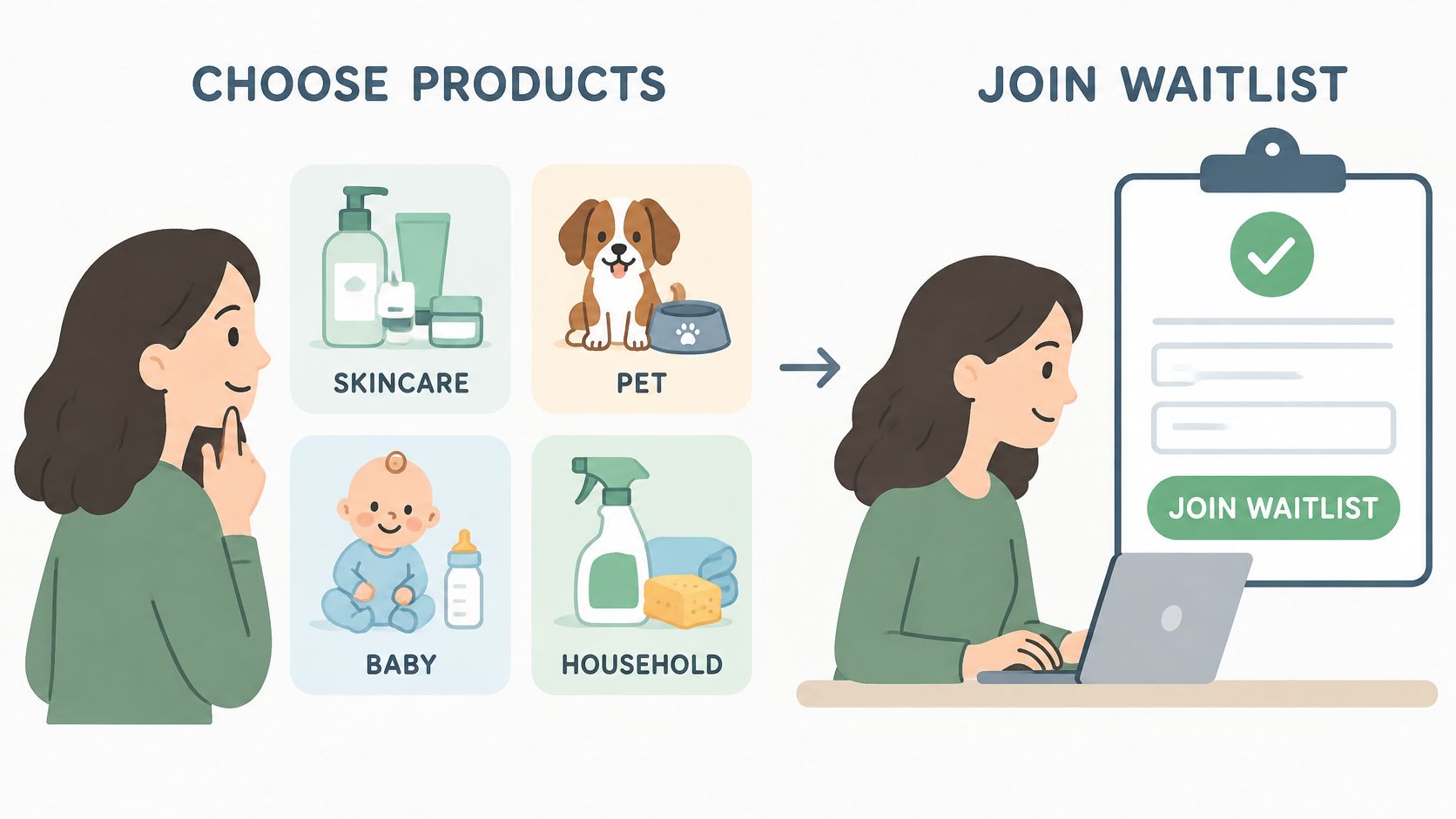
Each step below exists for a reason, and skipping one is how people end up with a product they can't review or a deadline they miss.
- Pick categories you use. Choose skincare, pet products, baby supplies or household goods that already sit in your routine. Honest reviews are easier to write when you have a baseline to compare against, and someone who has never worn fragrance can't say whether it lasts.
- Join the waitlist with your email address. SamplePact emails you when it's your turn, so a working inbox that you check often is the main requirement.
- Read each offer properly. Find four details before deciding: the product name, its stated value, the review deadline and the shipping information. If the deadline lands in the middle of a trip, that's a no for this round.
- Accept only what you can review candidly. Skip anything you wouldn't normally buy, even when it looks expensive. Testers who talk themselves into a product they don't want usually write a review that reads like a shrug.
- Let the brand ship it. After you say yes, the brand ships the product to you at no cost. There's nothing to pay at checkout and no order to place.
- Use it properly and take notes. Follow the directions for a fair trial, whether that means two weeks of nightly use or three dinners with the same sauce. Jot down what you liked, what you didn't, and how it compared with your usual brand. Notes taken in the moment beat a memory rebuilt at the deadline.
- Post your review on the brand's site by the deadline. After that, the product is yours to keep. The date matters more than it looks, because brands plan launches around review timing.
Two problems have simple answers. If the package never arrives, contact the sender before the deadline rather than after it, and say what happened; a missing box is a shipping issue, not a missed review. If the product turns out to be unsuitable, ask about returning it instead of forcing a review of something you couldn't really use.
Before the deadline: a quick message about a late or unsuitable package always beats a late review or a review written about a product you never properly tried.
To decide whether filming a sample is worth the effort, our guide to getting free samples on TikTok explains how short video reviews fit into a sampling workflow.
Telling Real Sampling Offers From Scams
A free product offer should make the exchange easy to understand before you hand over your details. The product may cost nothing, but your feedback, attention and personal information still have value. Clear terms help you judge whether that trade suits you.
Look for these details before signing up:
- The brand and the exact product. You should be able to identify the company and item, rather than rely on a photo of a mystery box.
- What you'll do in return. The offer should specify whether it requires a review, photo or short video, and where that content will appear.
- The deadline. If feedback is required, check when it is due before agreeing.
- What it costs you. Check whether both the product and shipping are free. A shipping charge is still a cost, even when the sample itself is described as free.
Vague terms are a reason to pause. So are requests for a bank login or full card number to claim something described as free. Pressure to decide immediately makes it harder to check the exchange carefully. Don't let urgency replace clear answers.
Three privacy questions worth asking
How long do you keep my details? Look for a clear retention period for your name, address and review history. An open-ended permission to keep information for any purpose is a term you can decline.
Do you share or sell my information for targeted advertising? Your delivery address serves a different purpose from a profile built around your categories, browsing and review topics. Ask what the program collects and how it uses that information beyond sending the sample.
How do I ask you to stop? Look for a working route to delete your account, withdraw marketing consent and request removal of stored photos or videos. Check that route before signing up, while you can still choose whether to participate.
Who gets your address
Check who receives your shipping details and why. The party sending the product needs an address for delivery; that does not make unrelated marketing part of the same exchange. Look for a separate, optional marketing checkbox rather than consent folded into the sample's terms.
For an offer-specific discussion, see our look at whether Daily Goodie Box is legit.
If a program dodges questions about costs, obligations or privacy, skip it. You don't owe an offer your details because it promises something free.
Join the Waitlist for Your First Offer
The trade comes down to one sentence: you write an honest review on the brand's own website, and you keep the product. Everything else is scheduling.
That suits a few kinds of people especially well. Adults in the United States who want to try beauty, skincare and personal care products. Parents and pet owners looking for baby or pet samples that fit their week. Shoppers who enjoy reviewing food and household goods without building a social media following, since matching never requires one.
Joining as a tester is free, and the products and shipping are free too. A clear email address is all you need to get on the waitlist, and you'll hear from us when it's your turn.
Set expectations clearly. Offers depend on matching, not every product fits every tester, deadlines matter, and nothing ships until you accept. Joining early and sharing your referral link gets you your first offer sooner.
When you're ready, join the SamplePact waitlist and choose the categories you use. We'd be glad to send you something worth a real opinion.
SamplePact connects US brands with testers who receive products free and publish honest reviews on the brand's own website, which keeps a genuine opinion right where a shopper is deciding. If a free sample has ever felt like a small mystery, this is the simplest version of the exchange: the product is yours to keep, and the only thing you owe is your real experience. Visit SamplePact, pick the categories that match your routine, and let your first offer arrive.
SamplePact
Get free products to try
Brands send you new products for free, and your honest review goes on their own website. It's free to join, and the products and shipping are free too!
- UGC creators5 min readWhat Is a UGC Creator?What the term means, how UGC differs from influencer work, how to get started and how disclosure works.
- Free samples4 min readHow to Get Free Samples on TikTokHow TikTok Shop's free samples work for creators, from who qualifies to the 14-day posting rule.
- Product testing4 min readHow to Become an Amazon Product TesterHow Amazon Vine invitations work, what Vine Voices get, and Amazon's rules on free products for reviews.